
Crawl space encapsulation in Secessionville
Secessionville is on the eastern side of James Island, an area known for its marshes, creeks and its place in Civil War history, where the Battle of Secessionville was fought in 1862. Today it is a mix of older homes, newer construction and creekside properties, with big skies and open marsh views.
That waterside setting is a large part of its appeal, and also its challenge. Crawl spaces here face tidal groundwater, storm surge, salt air and humid summers. We help homeowners prepare for it.
What makes Secessionville crawl spaces different
Marsh and creek proximity. Tidal water is close, and groundwater follows it.
Low elevation. Many lots sit only a few feet above sea level.
Salt and wind exposure. Open exposure to coastal air speeds corrosion.
A mix of old and new. Older homes with vented crawl spaces sit beside newer houses, some elevated or built to current flood standards.
Septic and drainage variations. Some properties rely on different drainage and utility setups than city-served neighborhoods, which affects how water moves.
Homes in Secessionville
Housing includes older cottages and ranches, family homes, newer construction and some elevated homes. Elevated homes may have open space beneath rather than a traditional enclosed crawl space, and require a different approach.
Foundations vary from masonry walls to piers and pilings. In flood zones, engineered flood vents and elevated construction are common. We identify what you have before recommending anything.
Water, soil and flood conditions in Secessionville
Tidal flooding. High tides can put water on roads and yards.
Storm surge. Hurricanes and strong storms can bring significant surge.
Saturated soils. Marsh soils hold water and drain slowly.
Humid, salty air. Summer humidity and salt attack wood and metal.
Flood zone construction. Many properties are in mapped flood zones with specific vent and construction requirements.
Crawl space problems we see in Secessionville
- Standing water and wet soil
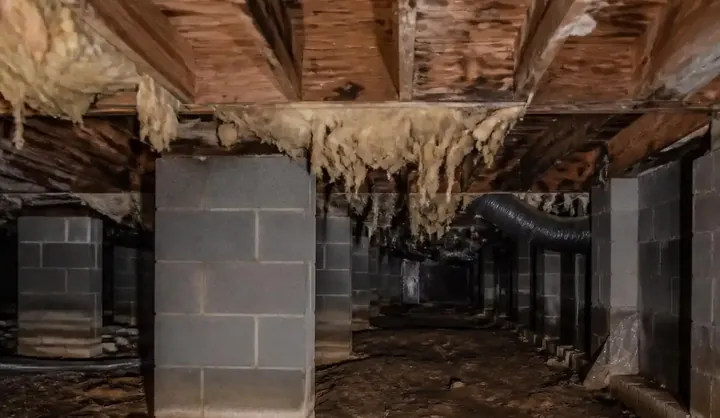
- Mold on framing and insulation
- Rusted ductwork, fasteners and straps
- Wet or fallen insulation
- Rot at sills and joist ends
- Pest activity
- Failed ground plastic
- Sweating pipes and ducts
- Humid, musty indoor air
What we usually recommend in Secessionville
Evaluate construction type first. Enclosed crawl spaces, elevated homes and homes with engineered flood vents each need different plans. We explain which applies.
Water control. Drainage and sump pumps and waterproofing where groundwater reaches the space.
Cleanout and treatment. See cleanout and mold remediation.
Repairs. See crawl space repair.
A sealed system where appropriate. Vapor barrier, vent sealing, dehumidifier and insulation.
For homes with a traditional crawl space, this is full encapsulation.
What an inspection and job look like in Secessionville
The inspection. We begin by identifying what kind of foundation you have, because enclosed crawl spaces, elevated homes and homes with engineered flood vents each call for a different plan. We take humidity and wood moisture readings, photograph the framing, piers, ducts and soil, and look for the source of any water. You see the photos and hear what we found in plain language before anything is quoted.
The written plan. You receive a scope that names each step, each material and the order of work. The scope spells out what we can and cannot do given your flood zone and foundation type, so there are no surprises.
Cleanout, treatment and repairs. Debris and failed insulation come out, mold is treated and damaged wood is repaired. Salt exposure means we pay close attention to metal components and replace corroded hangers, straps and fasteners.
Drainage and water control. Where water collects or groundwater reaches the space, we install drainage and a sealed sump basin before anything is covered.
Sealing and conditioning. A reinforced liner goes down with sealed seams, vents and penetrations are closed and a dehumidifier sized to the space goes in, with insulation where the plan calls for it.
The walkthrough. We explain the limits of any system honestly, show you how the pump and dehumidifier work and tell you what to check before and after storms.
A closer look at Secessionville
Secessionville has a different feel from the rest of Charleston. The land is open, the marsh runs to the horizon and the weather is part of daily life. Homes here range from older family houses that have stood for decades to newer builds raised high above the ground to meet current flood standards.
That range matters because "crawl space" does not mean the same thing on every lot. A traditional enclosed crawl space can usually be sealed and conditioned. An elevated home with open space beneath it is a different structure, and in some flood zones, enclosing that space is restricted. Homes with engineered flood vents need those vents to remain functional. Our first job is to figure out which situation you are in, and be honest about what the best approach is.
Where encapsulation is appropriate, the benefits are significant. Salt, humidity and tidal groundwater are exactly the conditions that punish an open crawl space, and a sealed, drained and dehumidified one holds up far better.
Living with tide and storms
Secessionville homeowners know that water is part of life here. High tides can cover low roads, storms bring surge and rain, and groundwater follows the tide. A crawl space cannot change that, but it can be designed to handle it.
The practical measures are straightforward. Direct gutters and downspouts away from the house. Keep the sump pump tested and powered, ideally with a battery backup. Use materials rated for a coastal environment. Avoid blocking flood vents. And inspect the crawl space after any significant storm.
We talk honestly about what these steps can do. They keep ordinary moisture, tidal groundwater and heavy rain from causing long-term damage. They do not make a home flood-proof, and no honest contractor can promise otherwise.
A typical project in Secessionville
Every Secessionville project starts with an honest assessment of the structure. We identify whether the home has an enclosed crawl space, an elevated foundation, engineered flood vents or some combination. Then we explain which services are appropriate and which are not, given the flood zone and construction type.
For enclosed crawl spaces, the work follows the usual sequence: cleanout, treatment, repairs, drainage, liner, sealing, insulation and dehumidification, all specified for a coastal environment. For elevated homes, we focus on what protects the structure without enclosing space that should stay open, which may mean addressing drainage, insulation or moisture around the lower framing instead.
Throughout, we use materials chosen for salt and humidity, and we are clear about what any system can and cannot do during a major flood.
Keeping a Secessionville crawl space healthy
Test the sump pump and battery backup before storm season. Keep discharge lines clear. Inspect metal components for corrosion. Leave engineered flood vents alone. After storms, check for water and call promptly if you find any. And keep documentation of the work for insurance purposes.
Choosing materials for a coastal setting
Materials matter more near the marsh than almost anywhere else in Charleston. Standard fasteners corrode. Cheap liners degrade. Equipment housings rust. For Secessionville homes we specify corrosion-resistant hardware, reinforced liners and equipment suited to humid, salty air. It costs a little more up front and saves a lot later. We also recommend periodic inspection, since coastal conditions are harder on every component than inland ones.
Local rules and practical notes
Flood zones and flood vents. Many properties are in mapped flood zones. Do not block engineered flood vents without confirming requirements with your floodplain administrator or insurance agent.
Elevated homes. Open space under an elevated home is not a standard crawl space, and some rules restrict enclosing it.
Power backup. Storms mean outages. Consider battery backup for pumps.
What crawl space work costs in Secessionville
Cost depends on construction type, water entry and repairs. We quote after inspection. See the cost guide. Nearby Riverland Terrace has similar conditions.
Frequently asked questions
Can you encapsulate an elevated home?
It depends on the construction and flood rules. We tell you what is allowed and appropriate.
Is my crawl space too wet to seal?
Not if water is managed first.
Will salt air ruin the system?
Quality materials hold up. We select them for coastal conditions.
What about flood vents?
We identify them and do not alter them without confirming requirements.
Does the marsh smell come from my crawl space?
Not usually, but damp soil and mold can create odors.
How do I schedule an inspection?
Call (877) 720-8173.
Own a Secessionville home? Call and we will inspect the crawl space.
Call (877) 720-8173