
Why cleanout matters
A crawl space is a place where things collect for decades. Construction scraps, fallen insulation, old ductwork, leaves and dirt blown in through vents, animal droppings and the remains of past leaks all end up on the ground. Most of it is organic, and organic material is food for mold and pests.
If you seal a crawl space without removing that material, you trap a food source in a closed space. You also lay the liner over sharp objects that can puncture it, and over uneven ground that lets seams lift. Cleanout is the foundation of a good installation.
What we remove
Construction debris. Wood scraps, cardboard, paper, packaging, old forms and other materials left behind during construction or past repairs.
Failed insulation. Fiberglass batts that are wet, sagging, moldy or lying on the ground. See crawl space insulation for what we install instead.
Old vapor barriers. Torn, wet or dirty plastic sheeting that is no longer working. Layering new liner over old traps moisture.
Organic matter. Leaves, roots, wood and anything that decays.
Animal waste and nesting. Droppings, nesting material and carcasses from rodents and other animals.
Contaminated materials. Items affected by mold or by sewage or water leaks, which cannot be cleaned and must be removed.
Abandoned items. Old equipment, stored items and discarded materials that no one should be storing in a crawl space.
Sharp objects. Nails, screws and rocks that could puncture a liner.
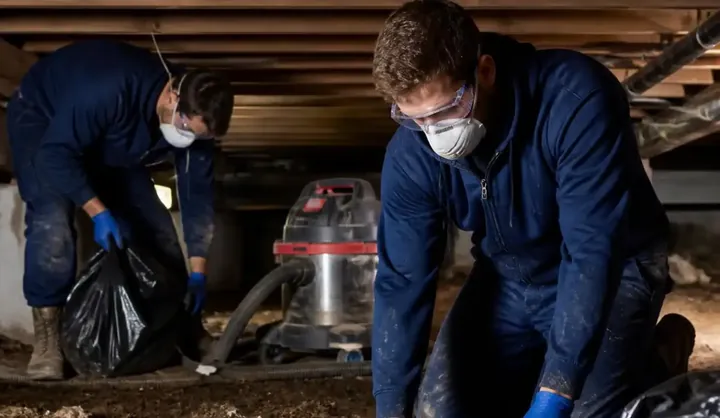
How we clean a crawl space
Protective gear and containment. The crew wears respirators, protective suits and gloves. Crawl space air connects to your living space, so we take steps to limit the spread of dust and spores.
Bulk removal. Large debris and failed insulation are bagged and carried out.
HEPA vacuuming. Fine dust, mold spores and debris are removed from surfaces with HEPA-filtered vacuums that capture small particles rather than blowing them around.
Surface cleaning. Framing, foundation walls and piers are cleaned of dirt and visible growth. See mold remediation when contamination is present.
Soil preparation. The ground is raked, leveled and cleared of sharp objects, so the liner will lie flat. Low spots may be filled and high spots knocked down. If standing water is present, we address drainage before final preparation.
Disposal. Debris is bagged and removed from your property, with materials disposed of properly.
Final inspection. We check that the space is clean and ready for the next phase.
Mold, pests and contamination
Cleanout is the point where we discover what is really under the house. Common findings include:
- Mold on framing and insulation. We treat it as part of the process. See mold remediation.
- Rodent activity. If we find nesting or droppings, we clean and sanitize and recommend pest control to resolve the entry points. Sealing the space helps keep them out.
- Termite damage. If we see mud tubes or damaged wood, we tell you right away. Termite treatment is handled by a licensed pest control provider, and we address framing through crawl space repair.
- Sewage or gray water leaks. These are health hazards. We stop work and recommend a plumber and appropriate remediation.
- Old materials of concern. In older homes, we may come across materials that need special handling, such as old duct wrap or insulation. If we suspect something hazardous, we stop and recommend testing before disturbing it.
Our cleanout and preparation process
- Walk the space. We note what is there, what needs to go and what hazards exist.
- Set up protection. Crew protection and containment are put in place.
- Remove debris and old materials. Everything that does not belong is bagged and removed.
- Vacuum and clean. HEPA vacuuming and surface cleaning follow.
- Treat if needed. Mold or contamination is addressed.
- Prepare the ground. The soil is leveled and cleared.
- Hand off to the next step. The space is ready for drainage, repair, liner installation and full encapsulation.
Cleanout as a standalone service
Not every homeowner wants a full encapsulation right away. Cleanout on its own can make sense when:
- You are preparing to sell or have had an inspection that noted debris or old insulation
- A leak or flood has left wet material in the space
- You need access for plumbing, HVAC or electrical work and the space is not usable
- Rodents have been in the space and you need it cleaned and sanitized
- You are phasing a project and want the foundation work done first
If you are considering encapsulation later, cleanout now is not wasted. It is a necessary first step, and we can pick up from there.
What to expect on the day
The crew arrives with equipment and sets up access. You may hear vacuums and see bags of debris moving out of the access point. We keep the work area tidy and protect floors and landscaping on the way in and out. Most homeowners do not need to be home for the whole job, but we recommend being available at the start and end for a walkthrough. For homes with pets, we ask that they be kept away from the work area.
What cleanout costs in Charleston
Cost depends on the size of the space, the amount and type of debris, the difficulty of access and any contamination we find. A tidy, accessible crawl space with little debris costs far less than one with heavy accumulation, old insulation and animal waste. Cleanout is usually priced as part of an overall scope. Our cost guide shows how it fits into the full project.
Why Charleston homeowners choose us for cleanout
Our background in certified mold inspection and remediation means we handle cleanout as the first step of a lasting installation, not as an afterthought. We have seen what happens when the next contractor encapsulates over a mess. We work from the peninsula to West Ashley, James Island and Daniel Island, and we bring the same standards to every crawl space.
What a clean crawl space looks like when we are done
Homeowners often ask what the result should be, and a clear picture helps you judge any contractor's work.
The ground is bare, level and free of sticks, rocks, wire and scraps. Framing is clean, with no loose dirt or visible growth on the surfaces. Old insulation, torn plastic and abandoned items are gone. Any animal waste has been removed and the area sanitized. There are no sharp objects poking up from the soil. Nothing organic is left to decay. Access is clear, so the next crew can work safely and efficiently.
Questions to ask any contractor about crawl space cleanout
- What exactly will you remove, and where does it go?
- Will you use HEPA vacuums, or just sweep and bag?
- What protection do you use to keep dust and spores out of my living space?
- What happens if you find mold, pests or a plumbing leak?
- Is cleanout priced separately, or part of the project?
- Will I see photos of the space before and after?
Common cleanout mistakes
Liner over debris. The most common mistake in the industry, and the one that causes the most failures.
Leaving old insulation in place. Wet fiberglass left behind keeps feeding moisture and mold.
Skipping dust control. Stirring up spores without containment sends them upstairs.
Ignoring what cleanout reveals. Mold, rot, pests and leaks found during cleanout should change the plan, not be ignored.
Treating it as unskilled work. A thorough cleanout takes training, protective equipment and attention to what you are looking at.
Why we document every cleanout
Cleanout is the one stage you cannot see once the liner is down, so we document it. Photographs of the space before cleaning, during removal and after preparation give you a record of what was found and what was done. That matters if you sell the house, make an insurance claim or hire another contractor later. It also keeps us honest, since a clean ground surface is easy to show and difficult to fake.
Frequently asked questions
Do I have to be home during cleanout?
Not for the whole job. We recommend being available at the start and the end so we can walk you through what we found.
Is it safe to stay in the house while you work?
In most cases, yes. We use containment and HEPA filtration to limit dust. If anyone in the home has a respiratory condition, tell us in advance.
What do you do with the debris?
It is bagged and removed from your property and disposed of properly.
Can I clean it myself?
You can remove light debris, but crawl spaces can contain mold, droppings, sharp objects and other hazards. Proper protective equipment matters, and so does knowing what you are looking at.
What if you find something serious?
We stop, show you what we found and explain the options. That could be a plumbing leak, termite damage, hazardous materials or structural problems.
Do you need cleanout before encapsulation?
Almost always. A clean surface is part of what makes a liner work. See encapsulation.
Is your crawl space full of debris or old insulation? Call and we will take a look.
Call (877) 720-8173