
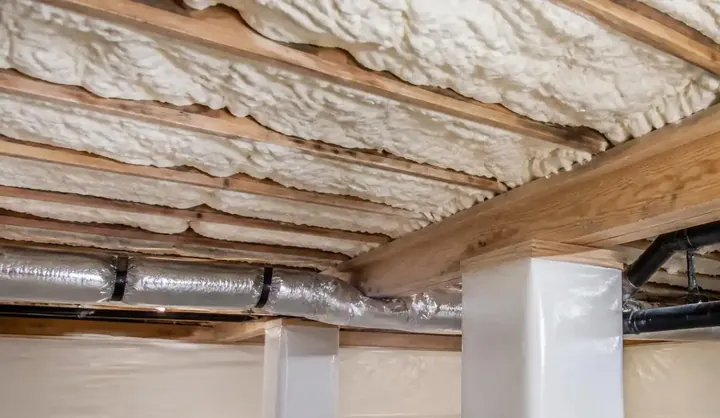
Crawl space encapsulation in Old Windermere
Old Windermere is a mature West Ashley neighborhood of mid-century homes on tree-shaded lots, a short drive from the Ashley River and the Citadel Mall area. The streets are quiet, the lots are generous and the canopy is thick. It is the kind of neighborhood where people stay for decades.
Long ownership has its own effect on crawl spaces. Houses that were built in the 1950s and 1960s have had decades to collect moisture, and many have been remodeled without anyone addressing what was underneath. We help Old Windermere homeowners find the cause, clear the damage and put in a system that protects the house for the long term.
What makes Old Windermere crawl spaces different
Mature tree cover. Large live oaks, pines and other trees shade the ground and drop debris, leaving soil under houses cool, wet and covered in organic matter.
Mid-century construction. Homes were built when vented crawl spaces and fiberglass batts were standard, before modern ideas about humid climates.
Flat lots. Lots here are level, and water moves slowly across them. Rain can sit against foundations instead of draining away.
Long ownership. Many houses have been in the same family for decades, which means original equipment and original problems.
Remodeled interiors. Many homes have new kitchens, baths and floors, with crawl spaces that were never part of the plan.
Homes in Old Windermere
Typical homes are single-story ranches and split-levels, many of brick or brick veneer, built in the 1950s and 1960s. Larger lots and generous floor plans are common. Some homes have crawl spaces under the entire footprint, while others combine crawl space with a slab section for a garage or den.
Foundations are generally masonry perimeter walls with interior piers, with vents spaced around the outside. Floor systems are wood joists and beams. Ductwork was added or replaced over the years and runs through the crawl space, often with deteriorating insulation and uneven sealing.
Because houses here are larger than the cottages in some nearby neighborhoods, crawl spaces can be more extensive, with more area to clean, seal and condition. They are usually easier to access, and the spaces tend to have more clearance.
Water, soil and flood conditions in Old Windermere
Shaded, slow-drying soil. Tree cover limits sun on the ground, and soil under houses can stay damp for months.
Flat grading. Water spreads out rather than flowing away, so after heavy rain it can linger near foundations.
Roots and debris. Roots can crack foundations and piers. Leaves and branches accumulate around vents and under houses.
Humidity from vents. In summer, humid air enters through vents and condenses on cooler surfaces.
Proximity to the Ashley River. Parts of West Ashley are low and affected by tides and storm surge. We look at conditions house by house.
Crawl space problems we see in Old Windermere
- Fiberglass insulation, decades old, sagging, wet or moldy
- Mold on joists and subfloor, particularly near vents
- Dirt floors or old, torn vapor barriers
- Roots and organic debris in and around the crawl space
- Rusted ductwork with failing insulation and loose seams
- Termites and other pests in damp, shaded areas
- Rot at sills and rim joists
- Moisture staining around plumbing
- Rooms above that feel damp, musty or cold
What we usually recommend in Old Windermere
Large-scale cleanout. Bigger spaces need more thorough clearing of debris, roots and old insulation. See cleanout.
Mold treatment. Growth on framing is cleaned and treated. See mold remediation.
Repairs. Rotted sills and joists are repaired. See crawl space repair.
Drainage where needed. Low spots on flat lots may call for drainage and a sump pump.
Liner and sealed vents. A reinforced vapor barrier and sealed vents close off moisture and humid air.
Dehumidification sized for a larger space. See dehumidifier installation.
Insulation. Moisture-tolerant insulation replaces failed batts.
This is the complete crawl space encapsulation system.
Larger homes mean larger systems
A ranch with an extensive crawl space is not simply a bigger version of a small cottage. It has more volume to condition, more perimeter to seal and more distance between the dehumidifier and the far corners. We handle this by sizing equipment to the actual volume and layout, adding air movement or ducting where it helps and paying attention to sections that are cut off by interior piers or walls.
It also means a larger investment, which is why we explain exactly what we are installing and why. You will see the scope in writing before anything starts.
The process in an Old Windermere home
- Inspection. We check moisture, framing, ducts and access, and photograph the findings.
- Plan. A written scope and price.
- Cleanout, treatment and repairs. Debris removed, mold treated, framing repaired.
- Drainage. Where needed.
- Sealing. Liner, vents and penetrations are closed.
- Conditioning. Insulation and dehumidifier complete the system.
- Walkthrough. We review the result.
A closer look at Old Windermere
Old Windermere is quiet in the way that only a mature neighborhood can be. The lots are big, the canopy is full and the houses have settled into the landscape. Many of the original owners or their families are still there, and the streets show it: long-kept gardens, well-used porches and homes that have been updated gradually rather than all at once.
That gradual updating is why crawl spaces here often hold several generations of work. A layer of original fiberglass, a second layer added in the eighties, new ductwork from a later HVAC replacement and a thin plastic sheet from a well-meaning contractor can all be found in the same space. Sorting through it takes time, and it is why we start every job with a full cleanout rather than trying to build on what is there.
Larger houses with bigger footprints also mean more systems under the floor. Water heaters, air handlers and plumbing manifolds may sit in the crawl space, and the plan needs to account for combustion air, access and service clearance around them.
Keeping an Old Windermere crawl space healthy
Large lots mean large trees, and large trees mean seasonal debris. Keep leaves and branches away from the foundation. Clear gutters before fall. Make sure downspouts discharge well away from the house. Check the dehumidifier and any sump pump at the change of seasons. And when roots approach the foundation, call before they cause damage. A short annual look at the crawl space, ideally with a flashlight and a camera, is the best way to catch problems early.
Planning for a long, careful job
Old Windermere homes are often larger than the average West Ashley cottage, and the work reflects that. A thorough cleanout of an extensive crawl space may take a day or more by itself. Sealing a large perimeter and wrapping many piers takes time, and so does sizing and placing the dehumidifier so air reaches every corner. We schedule accordingly and give you a realistic timeline in the written scope. We would rather tell you it is a four-day job and finish on time than promise two days and rush.
Local rules and practical notes
Flood zones. Some Old Windermere properties are in mapped flood zones. Confirm engineered flood vent requirements before altering them.
HOA and covenants. Most work is below the floor and does not change the exterior. If your neighborhood has rules about exterior work, check first.
Trees and landscaping. We protect landscaping and trees where possible and work around roots and shrubs near access points.
What crawl space work costs in Old Windermere
Cost depends on the size of the crawl space, debris, drainage needs and repairs. Larger spaces cost more but may cost less per square foot. We quote after inspection. See our cost guide for planning ranges. Nearby homes in Byrnes Down and St. Andrews have similar construction.
Frequently asked questions
My ranch has crawl space under part of the house and slab under the rest. Does it matter?
It affects the plan. We seal the crawl space section and address the transition to the slab so air does not move between them.
Do trees cause crawl space problems?
They contribute. Shade keeps soil damp, and roots and debris create their own issues. A liner and dehumidifier compensate.
Can you handle a large crawl space in one visit?
Larger spaces often take several days. We give you a timeline with the written scope.
Will I notice a difference in the house?
Many homeowners notice less odor, fewer humidity swings and more comfortable floors.
Do you work with other contractors?
Yes. We coordinate with HVAC, plumbing and pest control as needed.
How do I schedule an inspection?
Call (877) 720-8173 and tell us your street.
Own an Old Windermere home? Call and we will inspect the crawl space.
Call (877) 720-8173