
Crawl space encapsulation in Hampton Park Terrace
Hampton Park Terrace is a residential neighborhood on the upper peninsula next to Hampton Park and The Citadel. It was developed in the early twentieth century as a streetcar-era suburb, and it still has that character: wide lots by downtown standards, deep porches, mature trees and a mix of bungalows and revival-style houses.
Beneath those houses are crawl spaces that have been breathing Charleston air for a hundred years. Some have been cared for. Many have not. We help owners understand what is going on under their floors and seal it up in a way that protects original woodwork and keeps the house comfortable.
What makes Hampton Park Terrace crawl spaces different
Century-old framing. Many homes were built in the 1920s and 1930s with solid, dense lumber that has held up well, but only if it has stayed dry. Where moisture has reached it, repairs must match the structure.
Heavy shade. Mature oaks, magnolias and tall hedges keep soil under houses cool and slow to dry, which sustains humidity in vented crawl spaces.
Original vents and masonry. Foundation vents, brick piers and masonry skirts date from the original construction and may be deteriorating.
Proximity to the park and water. Low ground near Hampton Park and the tidal edge of the peninsula adds to groundwater pressure after storms.
Long-term owners and heirloom houses. Many owners plan to stay for decades, so durability and sensible repairs matter more than quick fixes.
Homes in Hampton Park Terrace
Streets here include Craftsman bungalows, Colonial Revival homes, Tudor-influenced houses, foursquares and cottages. Many have large front porches, hardwood floors and original woodwork.
Foundation styles are typically brick piers with infill or skirting, or continuous masonry walls with vents. Heights are modest, and crawl spaces often have good access. Additions from later decades, such as rear sunrooms, kitchens and second floors, sit on different foundations and sometimes join the original floor system in awkward ways.
Because the houses are well-built and often well-loved, owners tend to want repairs that preserve what is there. That affects how we handle old wood, old masonry and old hardware.
Water, soil and flood conditions in Hampton Park Terrace
Shaded, damp soil. Tree cover means little sun reaches the ground around the house, so soil stays wet longer after rain.
A shallow water table. Bare ground under a vented crawl space continually gives off moisture, even in dry spells.
Storm and tide effects. Water can rise in low spots during king tides and strong storms, and pond on streets and in yards.
Humid air through vents. Original foundation vents let summer air condense on cooler framing and ductwork.
Roots and organic debris. Large trees mean leaf litter, roots and debris find their way under houses, feeding mold if they are left in place.
Crawl space problems we see in Hampton Park Terrace
- Original vents drawing humid air into an uninsulated or poorly insulated space
- Fiberglass batts, wet and sagging, sometimes decades old
- Mold on floor joists and the underside of heart pine subfloor
- Brick pier mortar that has eroded and piers that have shifted
- Rot at sills, rim joists and where wood touches damp masonry
- Roots and debris under the house
- Old galvanized plumbing and cast iron that sweats or leaks
- Rusted ducts and hangers
- Squeaky, soft or cold floors in older rooms
What we usually recommend in Hampton Park Terrace
Gentle, thorough cleaning. We remove debris, roots and failed insulation, and treat mold on original framing. See cleanout and mold remediation.
Repair that respects the structure. We reinforce original joists where we can and replace only what has to go. See crawl space repair.
Water management. Where soil stays wet or water collects, we install drainage before sealing.
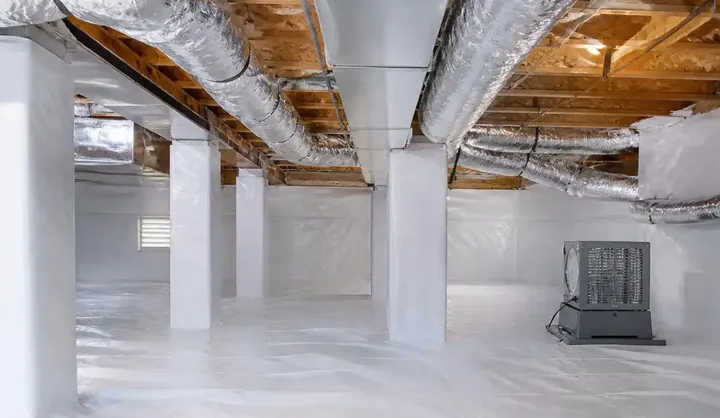
A sealed system. A reinforced vapor barrier, sealed vents and a dehumidifier keep humidity stable year-round.
Insulation chosen for the house. Foam board or closed cell foam replaces failed batts, keeping floors warmer and ducts inside the envelope.
All of it comes together in full crawl space encapsulation.
Why shade makes such a difference
Homeowners are often surprised that a crawl space under a shaded house can be wetter than one in full sun. The reason is simple. Sunlight warms soil and evaporates moisture, and wind carries it away. Under thick tree cover, soil stays cooler and damper, and the humid air that enters through vents condenses on cooler surfaces. The space never gets a chance to dry.
This is why a dehumidifier and sealed liner make such a noticeable difference in neighborhoods like this one. Instead of waiting for the weather to dry the crawl space, we take control of it.
The process in a Hampton Park Terrace home
- Inspection. We assess framing, piers, moisture and access, and document with photographs.
- Plan. A written scope names the work and sequence.
- Cleanout and treatment. Debris, roots and failed materials come out, and mold is treated.
- Repairs and drainage. Structural and water issues are addressed first.
- Sealing. Liner, seams and vents are closed.
- Conditioning. Insulation and dehumidifier complete the system.
- Walkthrough. We review the result and show you what to monitor.
A closer look at Hampton Park Terrace
Hampton Park Terrace was built when houses were meant to last, and many have. Dense old-growth lumber, deep porches and thoughtful floor plans have carried these homes for a century. What they were not designed for is a climate that feels wetter than it did when they were built, with more frequent heavy rain, more tidal flooding and long humid summers.
Under the houses, the original ventilation strategy is still in place. Brick piers and skirting with vents, an open dirt floor and a layer of batt insulation that was probably replaced once or twice are typical. Over time the combination has quietly worked against the wood. Mold appears first on the underside of the subfloor. Then sills and joist ends begin to soften where they meet damp masonry. By the time floors feel cold or soft, the process has been underway for years.
The good news is that old, dense lumber is resilient. With the moisture removed, a hundred-year-old floor system can last another hundred years, and much of what looks like damage is surface growth that cleans up.
Keeping a Hampton Park Terrace crawl space healthy
Mature trees mean seasonal maintenance. In fall, clear leaves away from the foundation and keep gutters flowing. In spring, check the access door and the liner after storms. Keep shrubs off the foundation. If a tree comes down or roots lift a section of foundation wall, call us before the damage spreads. And have the space looked at after any plumbing or HVAC work, to confirm the liner is intact and the seals are in place.
Planning around the park and the trees
Hampton Park Terrace owners have an advantage that newer neighborhoods lack: space. Lots are generous, access to the crawl space is often good and there is room to stage equipment without disturbing the garden. That makes the work quicker and quieter. It also means we can plan drainage discharge to a sensible spot in the yard rather than squeezing it into a narrow side passage. We still work carefully around mature trees and shrubs, and we flag any root issues before they turn into foundation problems.
Local rules and practical notes
Historic and conservation overlays. Parts of the area fall within local review districts. Most work is interior to the foundation, and we seal vents from the inside to avoid changing the exterior. Check with the city if any exterior features are involved.
Flood zones. Some properties are in mapped flood zones. Confirm requirements before altering engineered flood vents.
Access. Most houses have workable access, but shrubs, fences and trees may need to be cut back or worked around. We protect landscaping where possible.
What crawl space work costs in Hampton Park Terrace
Cost depends on size, access, debris, drainage and repairs. A dry crawl space with solid framing is simpler. One with shaded, wet soil, rotted sills and heavy debris costs more. We quote after inspection. See our cost guide for planning ranges. Homes in Wagener Terrace face similar conditions.
Frequently asked questions
Will sealing the crawl space hurt my original floors?
A dry crawl space is better for old hardwood than a damp one. Stable humidity reduces cupping, warping and mold on the underside.
My house is shaded by large oaks. Does that matter?
Yes. Shade keeps soil damp and slows drying, which increases crawl space humidity. A liner and dehumidifier compensate.
Can you repair original joists instead of replacing them?
Often. Sistering and reinforcing can preserve original framing in many cases. We recommend replacement only when necessary.
Do you remove roots and debris?
Yes. They are part of cleanout because they feed mold and puncture liners.
Will it help with my cold floors?
It often does, particularly with moisture-tolerant insulation. Results vary by house.
How do I schedule an inspection?
Call (877) 720-8173 and tell us your street and what you are noticing.
Own a Hampton Park Terrace home? Call and we will inspect the crawl space.
Call (877) 720-8173